Chapter 1 · The Number on the Screen
Mark's diagnosis moment
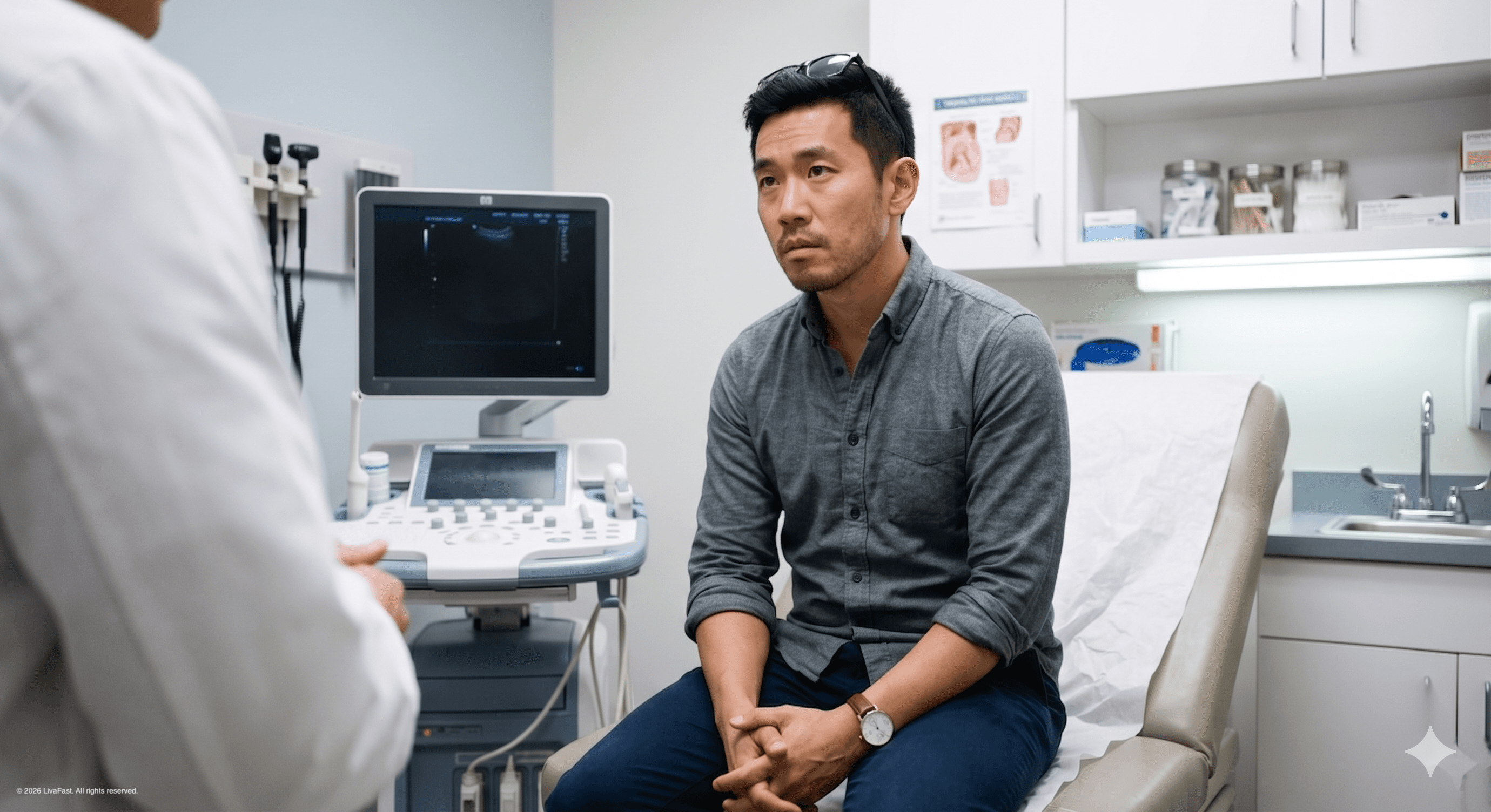
The exam room smelled like hand sanitizer and broken promises. Mark sat on the crinkly paper-covered chair, scrolling through Slack messages on his phone — something about a Q2 budget revision that could wait — and tried to look the way people look when they're not worried. He'd done this a hundred times: wellness screening follow-up, the kind of appointment where they told you your cholesterol was fine, your blood pressure was borderline, and you should probably eat fewer donuts.
Dr. Sarah Kim had been efficient and warm during the screening two weeks ago. She'd palpated his abdomen, asked the standard questions, ordered routine bloodwork. Today she'd review the results. Mark had mentally prepared himself for the lecture: sleep more, move more, stress less. The usual playbook.
But Dr. Kim didn't smile when she walked in. That was the first sign.
"Mark," she said, sitting on her stool and rolling close. No clipboard. That was the second sign. "I want to talk about your liver."
His stomach dropped. Liver. The word sat there like a stone in a still pond. He'd been fine a month ago. Two months ago. His liver wasn't supposed to be interesting. Livers were for people who drank too much — and Mark drank craft beer and maybe wine on weekends, sure, but it wasn't like he was a problem drinker. His dad drank more than he did.
"What about my liver?" His voice sounded smaller than he wanted.
"Your liver enzyme levels are elevated. ALT is 78, AST is 52. Those should be lower." She pulled up the ultrasound on her screen and turned the monitor toward him. "And this shows hepatic steatosis — fat accumulation in the liver. Moderate."
The words came at him in a sequence his brain processed like a foreign language. Elevated. Fat. Steatosis. These were words from other people's medical crises, not his.
"I don't... I don't really drink," Mark heard himself say, which was stupid. He'd already said that internally, in the moment before she'd delivered the news. He was defending himself against a judgment he'd invented.
"I know," Dr. Kim said gently. "That's actually important context. This isn't about alcohol. This is about metabolic dysfunction. Insulin resistance, likely." She paused. "Have you noticed any weight changes?"
Mark thought about stepping on the scale that morning — 218 pounds. He'd gotten on it without expecting much; he knew he'd been softer around the middle for the past year or two. But 218 was a number that meant something. He'd been 185 when he graduated from UT. The weight hadn't crept on overnight. It had been a slow accumulation — like the fat in his liver, apparently.
"Yeah," he said. "I've gained some weight. But I'm a VP now. I sit more."
"That's part of it. But combined with your bloodwork, the weight gain, and the imaging, we're looking at Non-Alcoholic Fatty Liver Disease. NAFLD." She let the acronym hang in the air for a moment. "It's a metabolic condition. Your liver is storing fat because your cells aren't responding properly to insulin. It's not about moral failure or character. It's biology."
Mark nodded like he understood, but he didn't. He'd always been the healthy one in his friend group. He went to the gym three or four times a week. He'd never had a serious health problem. His biggest medical event was a knee injury in college that had healed fine.
"What happens now?"
Dr. Kim explained that he'd need to see a hepatologist for a more detailed assessment, that there were lifestyle interventions that could reverse this — if he caught it early enough, if he made changes — and that he shouldn't panic. "This is manageable," she said. "But it needs to be taken seriously."
Mark drove out of the parking lot and sat in traffic on Congress Avenue. His hands felt shaky on the wheel. He pulled up Google on his phone at a red light and typed: fatty liver disease.
The first result said 38% of the global adult population.
He read it again. Thirty-eight percent. More than one in three. Not the alcoholics. Not the obese. Not some narrow demographic he could distance himself from. Just... people. People like his marketing director, Sarah. People like his friend Dave, who ran half-marathons. People who went to the gym and ate salads and still somehow developed fatty livers because of insulin resistance, metabolic dysfunction, and the slow-motion disaster of modern sedentary life.
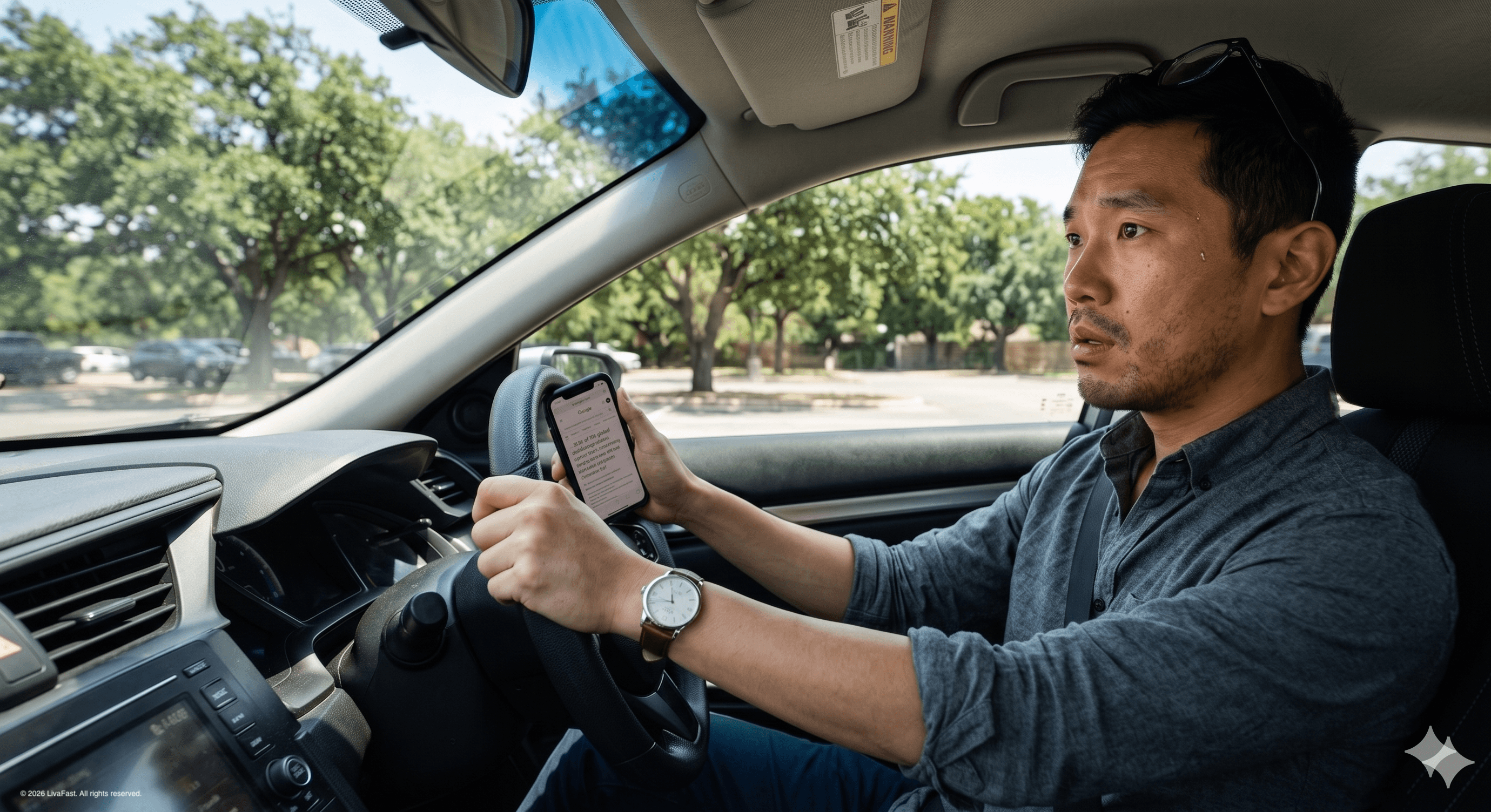
And the number was projected to hit fifty percent by 2040.
He sat in his car, in a parking lot in Austin, Texas, and felt the weight of those numbers pressing on his chest. He wasn't an outlier. He wasn't the failure he'd been constructing in his mind for the past twenty minutes. He was a statistic. A common one.
And if the statistics were real, then maybe the solutions were too.
That evening, after Priya had put the kids down and the house was quiet, Mark sat at the kitchen table with his laptop open. He had thirty-seven browser tabs and five health apps installed, none of which felt right. They either asked for too much data or tracked things that felt disconnected from his actual problem: my liver is storing fat, and I need to know if it's getting better or worse.

He closed the laptop and stared at the ceiling. He didn't have a plan yet. He didn't understand half the terms on his lab report. He didn't know what a FIB-4 score was or why it mattered, didn't know the difference between a hepatologist and a gastroenterologist, didn't know whether intermittent fasting was brilliant or dangerous for someone in his situation.
But he knew one thing. Tomorrow he'd call Dr. Kim's office and ask for that hepatologist referral. And tonight, he'd tell Priya. He wouldn't sit with this alone.
The number was on the screen. What he did next was up to him.
Fatty liver disease affects 38% of adults globally. Learn what MASLD is, why the name changed from NAFLD, and what you can do about it.
Track this in LivaFast
Your FIB-4 score updates automatically from your labs.